Our Methodology:
Structured, Strategic, and Tested
Our approach is built on three proprietary, evidence-based frameworks that provide a structured and repeatable process for influential communication. These frameworks were not developed in a classroom—they were forged on the frontlines of global public relations, reputation management, and strategic communications.

Why Frameworks Matter
Effective communication is not accidental. It is the result of intentional design, strategic thinking, and disciplined execution. Our proprietary frameworks provide leaders and organizations with a clear roadmap for crafting messages that connect, persuade, and inspire action.
Unlike generic presentation skills training that focuses on delivery techniques alone, our methodology addresses the full spectrum of strategic communication: the intent behind the message, the architecture of the narrative, the format and structure, and the presence and delivery that bring it to life.
This is not theory. This is a proven toolkit that has been tested and refined through decades of high-stakes communications work with some of the world's most influential organizations.

3 Proprietary Frameworks for Influential Communication
Each framework serves a distinct purpose, and together they provide a comprehensive approach to strategic storytelling and leadership communication.
Framework 1: The IDEA Framework
A four-part model for ensuring every communication is clear, purposeful, and resonant.
The IDEA Framework is our foundational planning tool for any high-stakes communication. Whether you are preparing for a board presentation, a team meeting, a media interview, or a change announcement, IDEA ensures that your message is strategic and outcome-focused.
The framework consists of four essential elements:
I – Intent: Defining Why the Message Matters Before crafting any message, leaders must be crystal clear on their intent. What is the purpose of this communication? What shift in understanding, belief, or behavior are you seeking to create? Without clarity of intent, even the most eloquent message will lack direction and impact.
D – Design: Structuring the Message for Maximum Clarity Once intent is clear, the next step is to design the message architecture. This involves organizing ideas in a logical, compelling sequence that guides the audience from where they are to where you need them to be. Design is about creating a narrative flow that is easy to follow and impossible to forget.
E – Emotion: Forging a Human Connection and Resonance Facts inform, but emotions move. The most effective communicators understand that people make decisions based on how they feel, not just what they know. This element focuses on identifying the emotional core of your message and ensuring it resonates on a human level, building empathy, trust, and connection.
A – Action: Defining the Desired Shift or Behavior Every communication should have a clear call to action. What do you want your audience to think, feel, or do differently as a result of this message? The Action element ensures that your communication is not just informative, but transformative—creating tangible outcomes and measurable impact.
Application: The IDEA Framework is used for planning any high-stakes communication, from presentations to team meetings, to ensure it is strategic and outcome-focused.
Visual Suggestion: A diagram showing the four elements (I-D-E-A) in a circular or linear flow
Framework 2: CSIC—The Storytelling Architecture
Subheadline: Our signature storytelling formula for turning abstract ideas into persuasive, memorable narratives.
Body: `CSIC is the storytelling architecture that transforms complex ideas, data, and strategies into compelling narratives that stick. This framework is applied across leadership communication, sales pitches, public speaking, and change management to create stories that are clear, compelling, and actionable.
The framework consists of four narrative building blocks:`
C – Challenge: What Is at Stake? The Hook Every great story begins with a challenge, a problem, or a tension that demands attention. This is the hook that draws your audience in and makes them care. The Challenge establishes context, creates urgency, and sets the stage for why this story matters. Without a clear challenge, there is no reason for the audience to lean in.
S – Solution: What Was Done? The Journey Once the challenge is established, the Solution describes the response—the actions taken, the approach chosen, the journey embarked upon. This is where you build credibility by demonstrating competence, resourcefulness, and strategic thinking. The Solution is not just about what was done, but why it was the right approach given the context.
I – Impact: What Changed and Why It Matters? The Payoff The Impact is the payoff—the tangible results, the transformation, the difference made. This is where you connect the dots between the challenge, the solution, and the outcomes. Impact answers the question: So what? Why does this matter? What changed as a result? This element builds trust and demonstrates value.
C – Call to Action: What Is Required Next? The Mobilization Every story should end with a clear Call to Action that mobilizes the audience. What do you want them to do, think, or feel differently? What is the next step? The Call to Action transforms passive listeners into active participants, ensuring that your story creates momentum and drives results.
Application: CSIC is applied across leadership communication, sales pitches, public speaking, and change management to create stories that are clear, compelling, and actionable.
Visual Suggestion: A diagram showing the four elements (C-S-I-C) in a narrative arc or journey format
Framework 3: The CFD Framework
A practical model that helps leaders master not just the what of their message,
but the how.
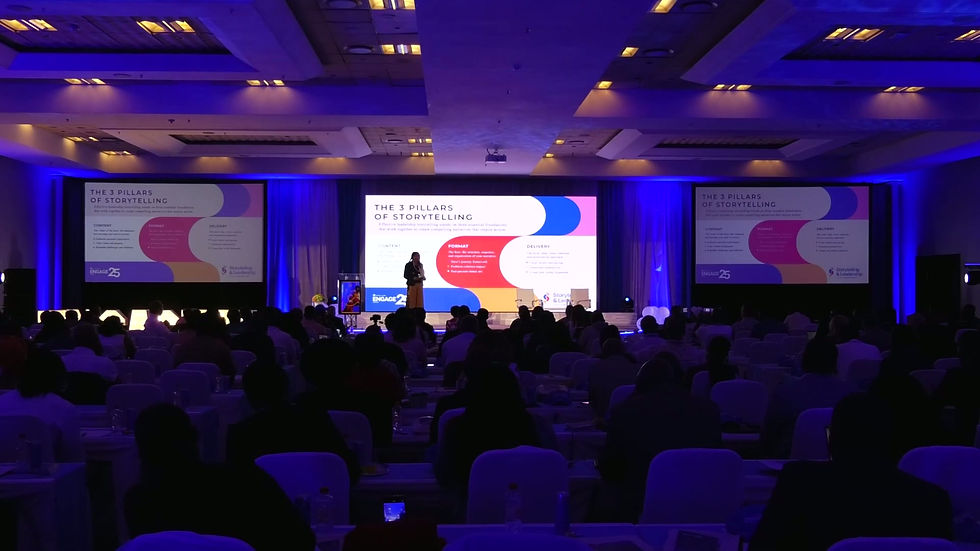
The CFD Framework ensures that leaders can bring their messages to life with authenticity and executive presence. While the IDEA and CSIC frameworks focus on the strategic design and narrative architecture of communication, CFD addresses the execution—how the message is shaped, structured, and delivered to maximize impact.
The framework consists of three critical dimensions:
C – Content:
The Core Message and Narrative Content is the foundation—the substance of what you are communicating. This includes the key messages, the narrative arc, the data and evidence, and the insights that form the core of your communication. Strong content is clear, credible, and aligned with your strategic intent. It is the "what" of your message.
F – Format:
How the Message Is Shaped, Structured, or Visualized Format is about how you package and present your content. Will you use slides, storytelling, data visualization, or a combination? How will you structure the flow of information? What visual aids or metaphors will you use to make complex ideas accessible? Format determines how easily your audience can absorb and retain your message.
D – Delivery:
The Emotional Intelligence, Presence, and Vocal Dynamics That Determine Impact Delivery is where content and format come to life through the leader's presence, voice, and emotional intelligence. This includes vocal dynamics (pace, tone, volume), body language, eye contact, and the ability to read and respond to the audience. Delivery is the "how" that determines whether your message lands with impact or falls flat. Even the best content and format will fail without authentic, confident delivery.
Application:
The CFD Framework is used in our workshops and coaching to ensure leaders can bring their messages to life with authenticity and executive presence.
Visual Suggestion: A Venn diagram or triangle showing the three elements (C-F-D) intersecting at "Influential Communication
How the Frameworks Work Together Section
A Comprehensive System for Strategic Communication
While each framework serves a distinct purpose, they are designed to work together as a comprehensive system for strategic communication.
IDEA provides the strategic foundation, ensuring clarity of intent and purpose before you begin crafting your message. CSIC gives you the narrative architecture to structure your ideas into a compelling story that resonates and persuades. CFD ensures that you can execute with confidence, bringing your message to life through strong content, smart formatting, and authentic delivery.
Together, these frameworks transform leaders from competent managers into compelling communicators who can shape cultures, drive agendas, and build influence.
Forged on the Frontlines,
Proven at Scale
These frameworks were not developed in a vacuum. They are the distillation of nearly 30 years of experience in global public relations, reputation management, crisis communications, and executive thought leadership.
We have used these frameworks to prepare leaders for high-stakes board presentations, to help organizations navigate complex change, to train sales teams to win major contracts, and to equip emerging leaders with the communication skills needed to drive impact.
They have been tested and refined across industries, cultures, and contexts—from Fortune 500 companies to global development organizations, from academic institutions to social impact initiatives.
The result is a methodology that is pragmatic, credible, and proven to deliver measurable results.
Strategic, Not Superficial
Difference 1
We Focus on Substance, Not Just Style
Most communication training focuses on delivery techniques—how to stand, where to look, how to use your hands.
We start with strategy. We help leaders clarify their intent, design their narrative, and ensure their message is grounded in substance before we address delivery.
Difference 2
We Build Capability, Not Dependency
Our goal is not to create dependency on consultants, but to build internal capability that endures.
We teach leaders and teams how to use our frameworks independently, ensuring they can apply them long after our engagement ends.
Difference 2
We Are Grounded in Real-World Experience
Our frameworks are not academic theories. They are born from decades of high-stakes communications work where the margin for error is zero.
We bring lived experience of how narratives shape perception, how trust is built or lost, and how leaders must communicate when it matters most.
From Frameworks to Action
How We Apply the Frameworks in Practice Section
In our workshops, strategic consulting engagements, and masterclasses, we don't just teach the frameworks—we help participants apply them to their real challenges.
This includes working through live case studies from participants' own contexts, practicing the frameworks in facilitated exercises and simulations, receiving personalized feedback and coaching on application, and developing actionable communication plans that participants can implement immediately.
The emphasis is always on practical application, not theoretical knowledge. Participants leave with tools they can use the very next day.
Ready to Master
Strategic Communication?

Whether you are preparing for a high-stakes presentation, building a unified narrative across your leadership team, or equipping your organization with communication capability at scale, our frameworks provide the structure, clarity, and confidence you need to succeed.